Targeted Clothes & Carpet Moth Eradication
Common clothes moths (Tineola bisselliella) and case-bearing clothes moths damage wool carpets, upholstery, cashmere, silk, and heritage textiles. It is not the adult moths that consume fabric, but their larvae, which feed on keratin in undisturbed dark corners.
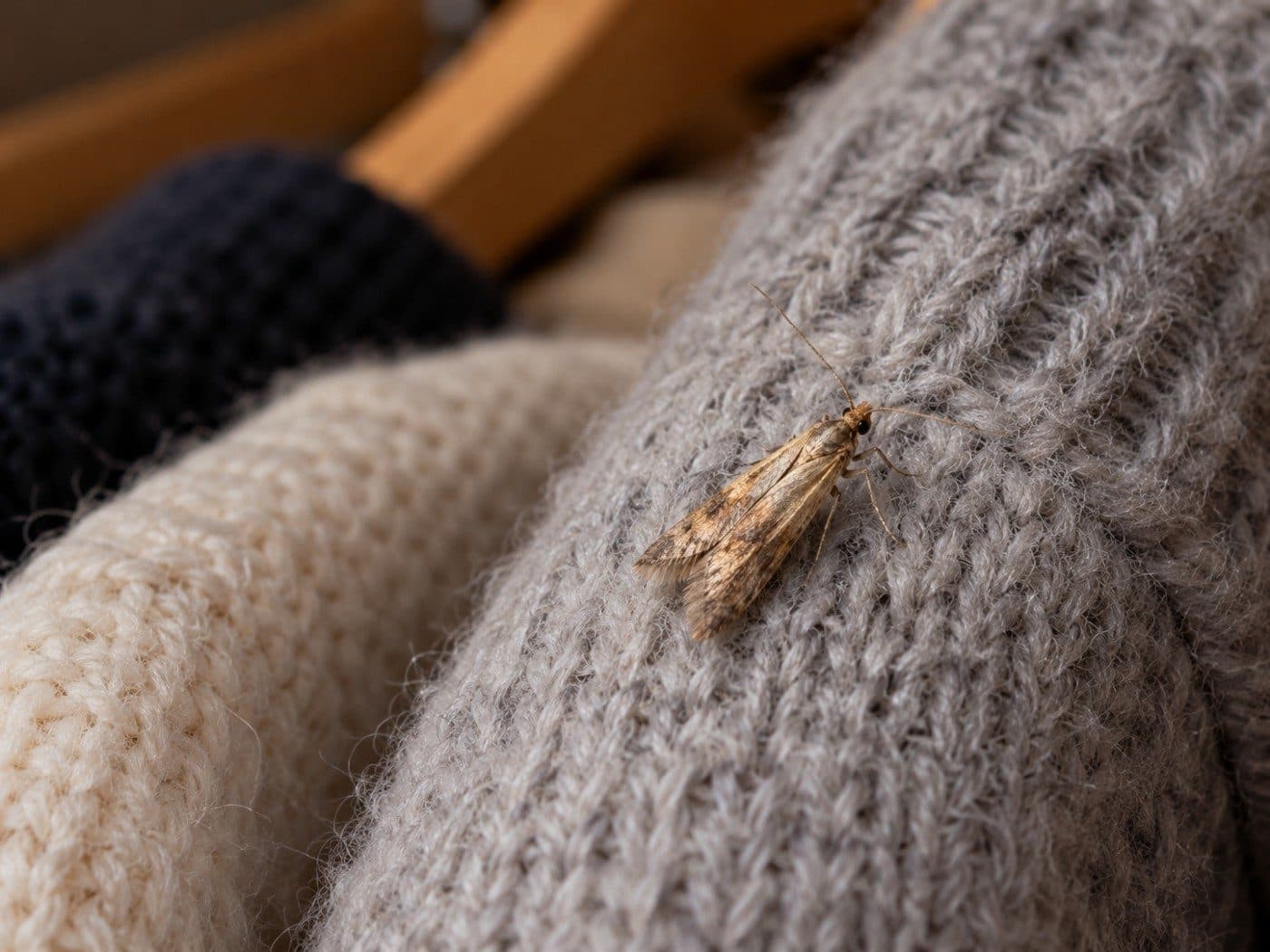
Common Signs of an Infestation
Look for these physical indicators around your property:
- Irregular holes appearing in woollen garments, cashmere knitwear, or suits
- Threadbare or balding patches along carpet edges, beneath heavy sofas, and under beds
- Small, cylindrical silken cases or webbing tubes attached to fabric or skirting
- Small, silvery-buff moths (6–8mm) running across carpets or fluttering weakly in wardrobes
- Fine sand-like debris (larval frass) on fabric surfaces
Potential Contributing Causes
Environmental factors and structural vulnerabilities that attract this pest:
- Undisturbed natural fiber carpets beneath heavy furniture that receive infrequent vacuuming
- Storage of unwashed garments containing microscopic sweat and food residues
- Open windows allowing adult moths into warm domestic spaces in spring and summer
When Professional Assistance May Be Appropriate
Our Methodical Inspection Approach
We inspect dark carpet margins, wardrobe interiors, under-furniture recesses, and floor edges with torchlight to assess larval distribution and fabric damage.
Targeted Treatment Methods
We apply high-grade micro-residual treatments to carpet margins and baseboard junctions, combined with pheromone monitoring traps and ultra-low-volume misting where appropriate to break the breeding cycle.
Domestic Considerations
We treat carpets and wardrobe bases with care, ensuring materials are protected without staining delicate timber floors or fabric backing.
Commercial Considerations
For clothing retailers, vintage boutiques, and historic properties, we offer integrated pest monitoring systems to safeguard high-value stock.
Prevention and Long-Term Proofing Advice
Allow treated textile zones and carpets to dry thoroughly before replacing clothing and allowing pets or children into the room.
Moth Control FAQs
No. Adult moths do not have functioning mouthparts. It is the hatched larvae that feed on keratin in wool, hair, feathers, and silk.
Related Pest Services
Request a Quote for Moth Control
Submit details regarding your property and observed signs. We confirm service availability within our confirmed UK coverage radius.